May 5, 2026
Ag Tech Trends Shaping the Future of Farming
As agriculture continues evolving at a rapid pace, farmers face both exciting opportunities and complex decisions about which technologies truly add value. In a recent Farm Credit East webinar, Joe Waddell, Industry and Innovation Officer at Horizon Farm Credit, provided a comprehensive look at the trends shaping modern farming. From innovation fundamentals to the future of AI and biologicals, producers should keep the following trends in mind when implementing new technologies in their operation.
Is Starts With Your Operation
Meaningful innovation doesn’t begin with the latest gadget; it starts with a deep understanding of your operation. Tightening fundamentals, improving existing systems and clearly identifying the problems you’re trying to solve are essential steps before introducing new technology. True innovation only matters when it enhances decision making, integrates smoothly into the broader farm system and delivers measurable value. When experimenting with emerging tools, farmers must be willing to learn and adjust quickly when something doesn’t work as expected.
Ag Tech Adoption Trends
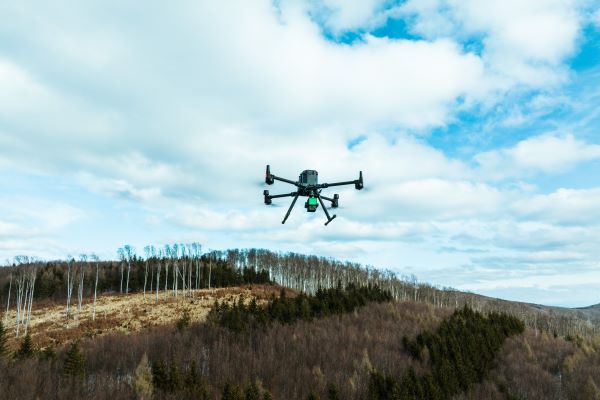
Some technologies, like GPS guidance and auto steer, have already reached widespread adoption and are now considered standard tools. Others, such as variable rate technology and the use of drone imagery, are growing slowly but steadily. Adoption hinges on three critical factors: return on investment, system compatibility and reliable support. Even the most promising technology will fail without a strong service infrastructure. Younger farmers tend to adopt new technology more readily, and upcoming generational transitions are expected to influence adoption patterns.
Biologicals in Agriculture
The biologicals market is expanding quickly, but with growth comes complexity. The space is fragmented, performance varies widely, and success depends heavily on factors like soil type, climate and geography. Key challenges include unclear product claims, short shelf life, manufacturing bottlenecks, tank mix compatibility issues and inconsistent regulations across regions. While biologicals show promise, they are not poised to replace synthetic inputs. Instead, the future points toward a combined approach, blending synthetics for reliability with biologicals for improved efficiency and resilience.
Artificial Intelligence (AI)
When looking at the use of AI in agriculture, there are two main categories: Large Language Models and Machine Learning and Computer Vision. Large Language Models, such as ChatGPT and Gemini, serve as research tools. Their accuracy varies, but private, company trained ag-specific models are emerging to improve reliability through proprietary data.
Machine Learning and Computer Vision are already delivering practical value for many operations through autonomous vehicles, crop stress detection, livestock monitoring and automated machinery adjustments. For example, see-and-spray systems can cut chemical use by 30-50% for some producers. AI’s potential is accelerating on farms as computing power evolves but data quality remains the biggest barrier. Weak data won’t be fixed by AI; it will simply become more obvious.
Smart Tech Adoption
Start simple and know your cost per acre before implementing something new. Farmers should test new technologies on a small scale and in tight-margin environments. Cut anything that doesn’t prove its value. Smaller farms should look to lower-cost digital tools and look at available incentives like REAP grants and state-level innovation programs. Ultimately, combining technologies rather than relying on any one tool creates stronger risk management and greater resilience across the operation.
To dive deeper into the above topics, review the webinar recording along with the presenter’s PowerPoint slides.

- Share this post on


